
Musical Theatre for Seniors in 2026: A Complete Guide
Table of Contents
Why Musical Theatre for Seniors Is Booming in 2026
The Creative Aging Movement
Classic Musicals for Seniors: What Works on Stage
Abbreviated and Adapted Versions
Community Theatre for Seniors: Finding Your Local Stage
How to Audition or Volunteer
A Legacy Arts Alternative to Traditional Tribute Shows
Health and Social Benefits of Performing Arts for Older Adults
What a Single Rehearsal Actually Trains
What the Research Community Says
The Social Side Is Not a Side Effect
How to Get Started with Musical Theatre for Seniors in 2026
A Realistic First 30 Days
Overcoming Stage Fright
What It Actually Costs, and How to Ask for Help
A Note on Timing
Frequently Asked Questions
Last Updated: September 23, 2026
Why Musical Theatre for Seniors Is Booming in 2026
Musical theatre for seniors is a growing movement that puts older adults on stage in abbreviated versions of classic shows. This guide explains why participation keeps climbing and how to join in.
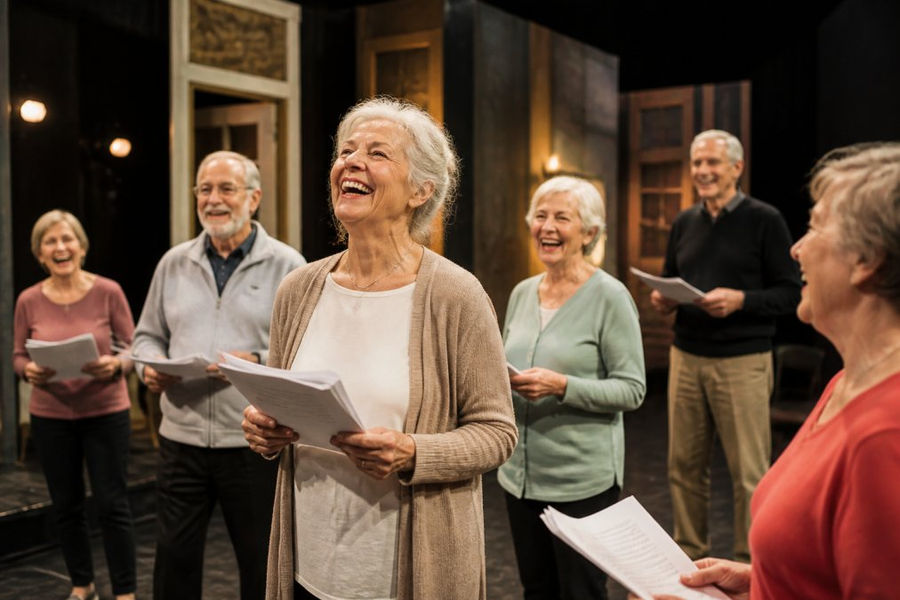
The shift is part of what arts groups call creative aging. The idea is simple: making art is not just for the young. It supports memory, movement, and mood at every age.
The Creative Aging Movement
Creative aging is the practice of building arts programs for older adults that focus on skill, community, and purpose. It treats participants as artists, not just audience members.
Community theatres across the country have noticed the demand. Many now run daytime rehearsals, offer larger-print scripts, and cast performers in their 60s, 70s, and 80s.
Key Takeaway The best senior theatre programs are built around the performer, not the calendar. Look for groups that adapt rehearsal times and materials to fit older adults.
Classic Musicals for Seniors: What Works on Stage
The shows that work best for senior performers are the ones the cast already knows by heart. Familiar scores reduce rehearsal pressure and let performers focus on stage presence and ensemble building.
Strong picks tend to share a few traits:
Well-known songs from the 1940s through the 1970s
Large ensemble numbers that give everyone a moment
Simple sets and flexible staging
Roles that suit mature voices
Abbreviated and Adapted Versions
Full-length shows often run two hours or more. Abbreviated musicals trim the running time to 45-60 minutes while keeping the best-loved numbers.
Watch Out Skipping performance rights to save time is a real risk. Even a shortened or rearranged version of a copyrighted show needs a license, and unlicensed performances can be shut down.
Community Theatre for Seniors: Finding Your Local Stage
Community theatre for seniors is the easiest entry point for most people. These groups welcome beginners, rehearse close to home, and rarely require prior stage experience.
Start your search with these places:
Local community theatres and playhouses
Senior centers and retirement community activities
Public libraries with arts programming
Faith-based groups that stage seasonal shows
College theatre departments with community outreach programs
How to Audition or Volunteer
Auditions for senior productions are usually low-pressure. Directors often ask for a short song and a few lines, not a full monologue.
A Legacy Arts Alternative to Traditional Tribute Shows
A legacy arts alternative focuses on preserving an artist's full body of work through live theatre and concert production, not just imitating a single performer. That distinction matters to audiences who want the real story behind the songs.
Health and Social Benefits of Performing Arts for Older Adults
Most articles about senior theatre stop at "it's fun and social." The research says something more specific: musical theatre is one of the few activities that simultaneously trains memory, breath, balance, and social timing, the exact systems that decline fastest with age. That combination is why practitioners in creative aging treat it as a health intervention, not a hobby.
What a Single Rehearsal Actually Trains
Break down a two-hour rehearsal and the cognitive and physical load becomes clear:
Verbal memory. Learning lyrics and dialogue recruits the same hippocampal pathways studied in memory research. Repetition across weeks is what makes the effect stick.
Working memory. Cueing on a scene partner's line while tracking your own next move forces the brain to hold and update information in real time.
Breath and voice. Projecting to the back of a room without a microphone builds respiratory control, the same skill targeted in clinical voice therapy for older adults.
Balance and gait. Blocking and simple choreography ask performers to move while attending to music, which is a known dual-task balance challenge.
Social timing. Ensemble work requires reading faces, waiting for cues, and matching tempo with others, a live social-cognition workout that solo activities cannot replicate.
What the Research Community Says
This is not folklore. The National Endowment for the Arts has funded creative-aging research for years, and the National Institute on Aging has highlighted social engagement and cognitive stimulation as protective factors in healthy aging. The Global Council on Brain Health, convened by AARP, has published consensus statements noting that mentally and socially stimulating activities, including music and theatre, support cognitive health in older adults.
The Social Side Is Not a Side Effect
Loneliness among older adults is a recognized public-health concern, and the U.S. Surgeon General has called social connection a priority. A cast is a structured social group with a shared goal and a fixed weekly meeting time, the two features that researchers say make social interventions actually work. Participants do not have to manufacture conversation; the show gives them one.
System | What Rehearsal Asks | Why It Matters With Age |
Memory | Lines, lyrics, cues | Supports recall and working memory |
Breath | Projection, phrasing | Builds respiratory control |
Balance | Blocking, movement to music | Trains dual-task stability |
Social | Ensemble timing, eye contact | Counters isolation and loneliness |
Purpose | Working toward a showcase | Adds a weekly goal and routine |
Key Takeaway The strongest senior theatre programs are not just entertaining, they are structured like a weekly wellness routine. If you are choosing between two groups, ask which one rehearses consistently, casts intergenerationally, and performs in front of an audience. Those three features are where most of the documented benefit lives.
How to Get Started with Musical Theatre for Seniors in 2026
Getting started takes less courage than most people expect, but the two real barriers are stage fright and money, and almost no guide addresses either honestly. Here is a beginner-friendly path that does.
A Realistic First 30 Days
Week 1, Watch, don't audition. Attend a local community theatre or senior-center production as an audience member. Note the age range on stage and how the program is run.
Week 2, Reach out. Call or email the group and ask three questions: Do you cast beginners? What is the rehearsal schedule? Is there any cost to participate?
Week 3, Volunteer backstage. Ushering, handing out programs, or helping with costumes gets you inside the process without memorizing a single line. Many performers start here.
Week 4, Try a low-stakes role. Ask about ensemble or chorus parts, which typically require less memorization and give you stage time in a supportive group.
Overcoming Stage Fright
Stage fright does not disappear, it shrinks with exposure. A few approaches that experienced directors recommend:
Start in the ensemble. Singing in a group means no one is watching only you.
Rehearse the room, not just the role. Walk the stage, find your light, and stand where you will stand on opening night.
Use a comfort key. Ask the music director to transpose your song down a step or two. Nobody in the audience knows the original key.
Memorize past the point of comfort. Nerves erase about a third of what you think you know; over-preparing is the antidote.
Reframe the feeling. The physical symptoms of fear and excitement are nearly identical. Directors often tell newcomers to call it excitement on purpose.
What It Actually Costs, and How to Ask for Help
Participation costs vary widely by group. Some community theatres and senior centers charge nothing; others collect a modest participation fee to cover scripts, costumes, and venue rental. Because fees change year to year and vary by production, the only reliable answer is the one you get directly from the group.
Before you rule a program out, ask these questions:
Is there a participation fee, and what does it cover?
Are scholarships, sliding-scale rates, or fee waivers available for older adults?
Are scripts and costumes provided, or do performers supply their own?
Is there any cost for tickets that family members will buy to see the show?
Pro Tip If a group says "we'll work with you," take them at their word and ask what that looks like in practice. A clear answer, a specific waiver, a payment plan, or a covered costume, is a good sign the program is genuinely accessible.
A Note on Timing
Most community and senior theatre groups hold auditions in late winter or early spring for spring and summer shows, and again in late summer for fall productions. If you miss one cycle, volunteer for the current show and audition for the next. There is almost always a next one.
Watch Out Do not wait for the "perfect" first show. The performers who stick with senior theatre are almost always the ones who joined an imperfect production, learned the process from the inside, and came back for the next audition with far less fear.
Frequently Asked Questions
What are some good classic musicals for elderly people?
Shows with familiar songs and gentle pacing work best: The Sound of Music, Oklahoma!, My Fair Lady, and The Music Man. Many senior theatre groups use abbreviated versions that run 60 to 90 minutes with a short intermission. Look for productions with large ensemble numbers, because they give more performers a chance to participate without heavy solo demands.
Where can I find cheap theatre tickets for people over 60?
Many community theatres, nonprofit arts organizations, and regional performance venues offer senior discounts or pay-what-you-can nights. Check the organization's website directly, ask about membership programs, and look for weekday matinees, which often cost less. Some libraries and senior centers also distribute free or reduced-price tickets to local productions.
How can seniors get involved in local musical theatre productions?
Start by contacting community theatres and nonprofit arts groups in your area. Most need performers, ushers, costume helpers, and set builders. If you prefer not to perform, volunteer roles offer a low-pressure way to join. Many groups also run creative workshops and rehearsal process sessions designed for beginners, so no prior stage experience is required.
What makes a musical production suitable for senior citizens?
Key factors include a familiar songbook, a runtime under two hours, accessible seating, and clear sound amplification. Shows with intergenerational casts and inclusive casting tend to work well because they mix experience levels. Productions that offer script adaptation or abbreviated musicals also make participation easier for seniors who want a lighter rehearsal schedule.
VIEW TOUR DATES & TICKETS


Comments